2 Problem Statement
Recent years have seen more erratic snow and glacial patterns in the Himalayas, particularly near Mount Everest. Seasonal shifts are disrupting climbing timelines and increasing route uncertainty.
Studies have observed rising snowlines, fragile snowpacks, and heightened avalanche activity during spring melt periods, posing serious risks to climbers (Matthews & Perry, 2021; Bajracharya et al., 2022).
Climbers often rely on outdated maps or generalized forecasts. These lack the spatial and temporal precision needed to assess rapidly changing snow conditions on specific routes.
Despite technological advances, few tools provide live, route-level insights into snow accumulation or avalanche risk, especially in high-altitude expedition contexts.
Addressing this gap begins with understanding the terrain-specific effects of climate variability. A reliable foundation of risk awareness is essential for any safety-oriented planning tool.
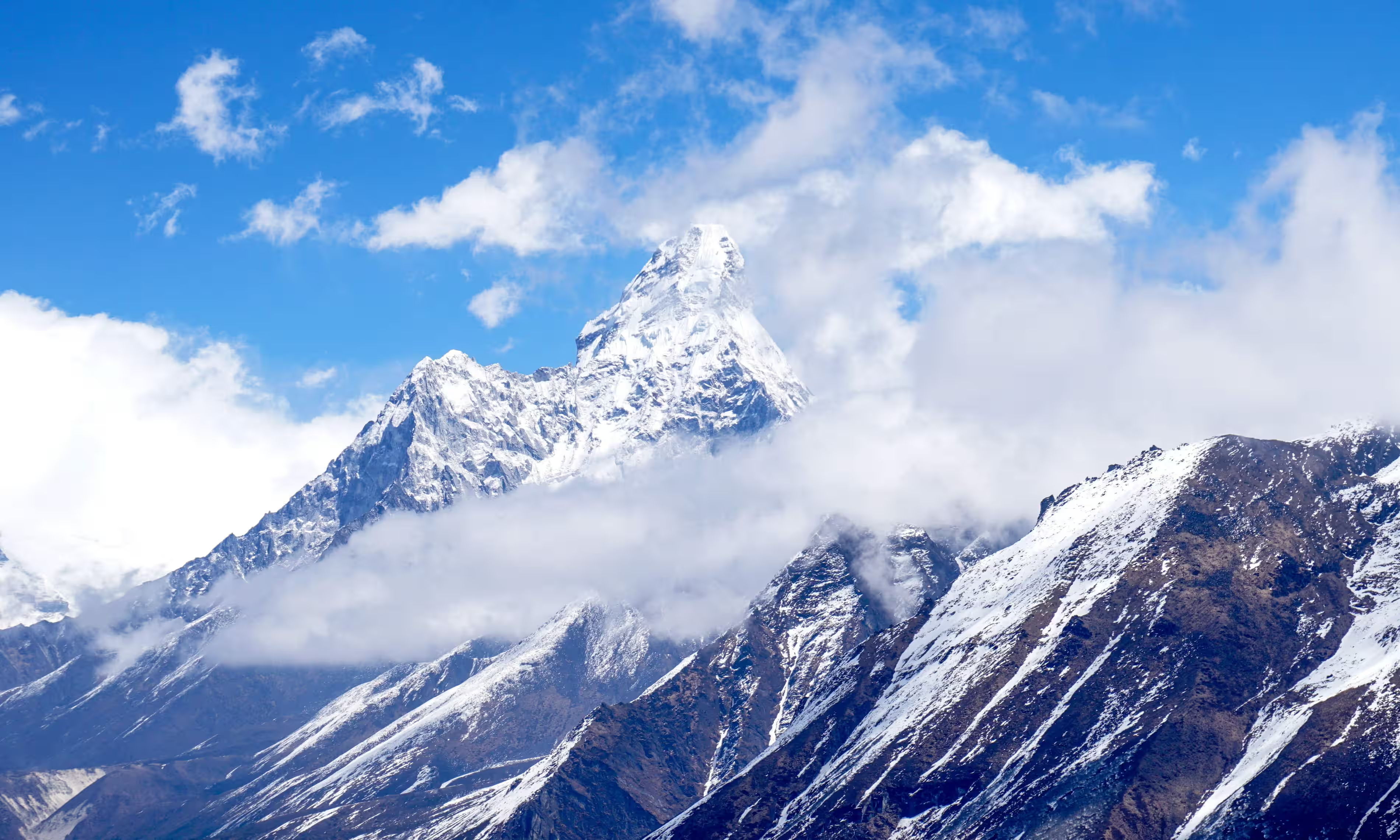
L’Everest, plus haut sommet du monde, fait partie de cette liste. Source: PRAKASH MATHEMA / AFP